
TL;DR:
- Car safety ratings help buyers understand vehicle protection and crash prevention features. Modern assessments prioritize crash avoidance technology, such as automatic emergency braking and lane keep assist, over structural strength alone. Cross-referencing multiple rating systems and real-world injury data ensures the most informed vehicle purchase decisions.
Evaluating car safety ratings is the process of interpreting scores and grades from organizations like the NHTSA, IIHS, and Consumer Reports to understand how well a vehicle protects occupants and prevents crashes. Car buyers who skip this step often rely on star counts alone, missing critical details about crash avoidance technology, structural performance, and real-world injury risk. This evaluate car safety ratings guide walks you through every major system, the features that drive scores, and the practical steps to apply this knowledge before you sign anything. Whether you are buying new for your family or shopping the used market, understanding vehicle safety scores is one of the highest-value decisions you can make.
What are the main car safety rating systems?
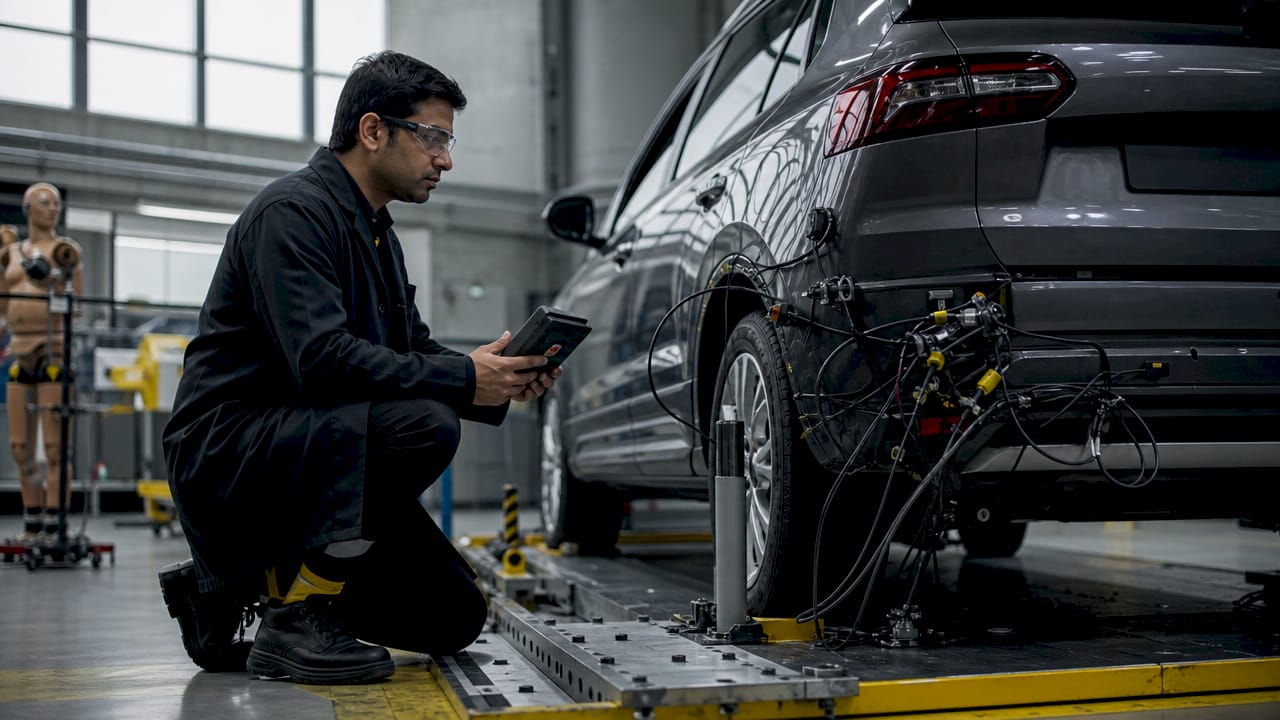
Three organizations define the standard for car crash test ratings in the United States: the National Highway Traffic Safety Administration (NHTSA), the Insurance Institute for Highway Safety (IIHS), and Consumer Reports. Each uses a different methodology, so a vehicle can score well on one scale and poorly on another.
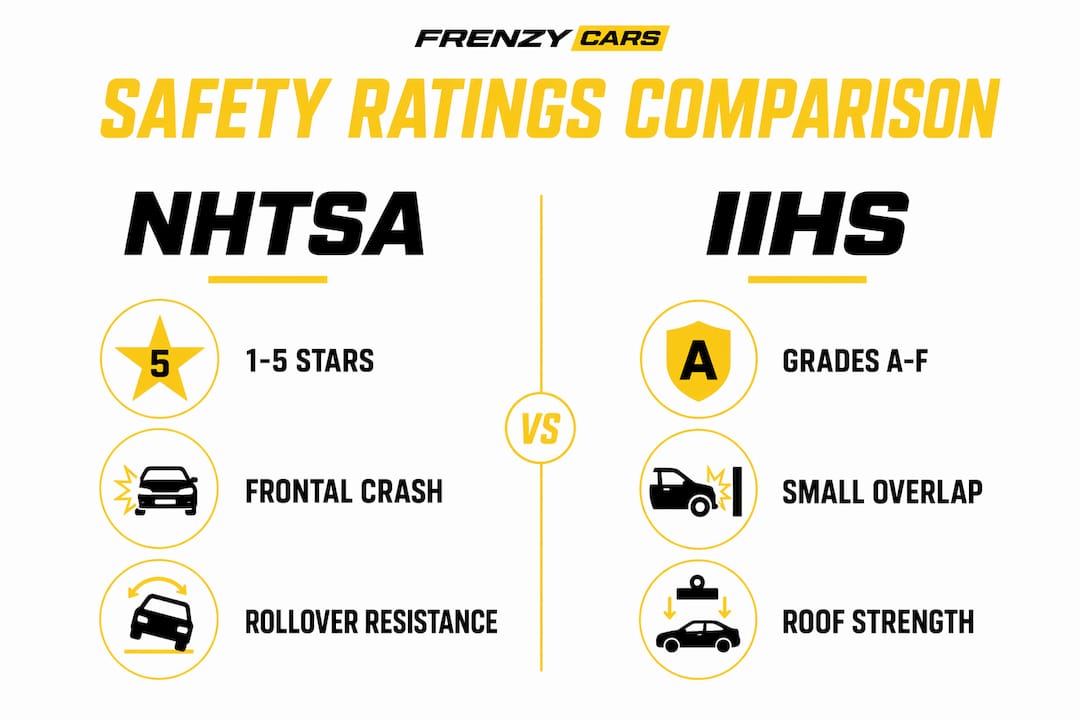
NHTSA uses a 5-star system that evaluates frontal crash, side crash, and rollover resistance. Stars are awarded per test category, and NHTSA does not combine them into a single overall score. That means a vehicle can earn five stars in frontal protection and only three in rollover resistance, which matters a great deal if you drive an SUV on winding roads.
IIHS assigns letter grades ranging from Good to Poor across individual test categories, including small overlap front, moderate overlap front, side, roof strength, and head restraints. IIHS also awards Top Safety Pick and Top Safety Pick+ designations. These are not simple averages. A vehicle must earn Good or Acceptable ratings across all structural tests and meet headlight and front crash prevention standards to qualify.
Consumer Reports takes a third approach. Its Safety Verdict system rates vehicles as Basic, Better, or Best by combining crash test results with the standard availability of crash avoidance features. A Best rating requires that highway-speed Automatic Emergency Braking (AEB), pedestrian detection, blind spot warning, and rear cross traffic warning all come standard, not as paid options.
| Rating system | Scale used | Key focus |
|---|---|---|
| NHTSA | 1–5 stars per category | Crash forces and rollover resistance |
| IIHS | Good / Acceptable / Marginal / Poor | Crashworthiness and crash avoidance |
| Consumer Reports Safety Verdict | Basic / Better / Best | Combined crash results and standard feature availability |
Which safety features most impact car safety ratings?
Crash avoidance technology now carries more weight in safety evaluations than structural performance alone. Modern rating frameworks prioritize preventing crashes, not just protecting occupants after impact. This shift reflects a “Stages of Safety” model covering prevention, protection, and post-crash response.
The features that move the needle most are:
- Automatic Emergency Braking (AEB): Detects obstacles and applies brakes without driver input. Highway-speed AEB is now a Consumer Reports requirement for a Best rating.
- Pedestrian detection: Extends AEB to identify people crossing roads, including night-time scenarios where human reaction time is slowest.
- Blind spot warning: Alerts drivers to vehicles in adjacent lanes, reducing lane-change collisions.
- Rear cross traffic warning: Detects approaching vehicles when reversing, critical in parking lots.
- Lane keeping assist: Corrects unintentional lane drift, a leading cause of highway fatalities.
Structural features still matter. Roof strength ratings from IIHS directly predict rollover survival. Small overlap front tests, introduced because traditional frontal tests missed corner-impact failures, exposed serious structural weaknesses in vehicles that previously scored well.
Post-crash technology is the third pillar. Automatic emergency call systems (eCall in some markets, branded equivalents in others) reduce response time after a collision. Faster emergency response directly reduces fatality rates in severe crashes.
Driver distraction from complex infotainment controls is a significant and often overlooked safety risk. Simpler, intuitive controls reduce cognitive load and keep attention on the road. A vehicle with a five-star NHTSA score but a confusing touchscreen interface is not as safe in practice as its rating suggests.
Pro Tip: Before finalizing any purchase, sit in the driver’s seat and operate the climate, audio, and navigation controls without looking. If you cannot do it in under three seconds, that interface is a distraction risk.
How to analyze safety ratings for new and used vehicles
Applying safety data to a specific vehicle requires more than pulling up a star count. The process differs depending on whether you are buying new or used.
Evaluating new cars
- Start with IIHS Top Safety Pick+. This designation is the most demanding combined standard in the American market. A vehicle earning it has passed structural, headlight, and crash avoidance tests simultaneously.
- Cross-reference NHTSA scores by category. Look at rollover resistance separately from frontal and side crash scores. Prioritize the categories most relevant to your driving environment.
- Check the Consumer Reports Safety Verdict. Confirm that critical crash avoidance features come standard on the trim you plan to buy, not just on higher packages.
- Verify the model year tested. Manufacturers sometimes update a model mid-cycle. A 2024 test result may not apply to a 2026 build if structural changes occurred.
Evaluating used cars
Used car buyers face a different challenge. Lab crash test ratings for older vehicles may be outdated after six years because testing protocols advance significantly over time. An older rating does not mean the vehicle became less safe. It means the score is no longer comparable to current vehicles on the same scale.
For vehicles older than six years, Used Car Safety Ratings (UCSR) use real-world crash injury data to assign safety stars. This reflects actual risk in crashes rather than controlled lab conditions. UCSR data is particularly useful for identifying which older models held up well in real collisions.
Verify safety equipment via VIN lookup before buying any used vehicle. Features like AEB were often optional on older trims. A 2019 model with a strong safety rating may not have AEB installed if the original buyer skipped the technology package.
Pro Tip: Use the NHTSA VIN decoder at nhtsa.gov to check recall history and confirm which safety systems were factory-installed on the exact vehicle you are considering.
| Vehicle age | Recommended rating source | Key action |
|---|---|---|
| 0–3 years | IIHS, NHTSA, Consumer Reports | Check trim-level feature availability |
| 3–6 years | IIHS, NHTSA | Confirm no mid-cycle structural changes |
| 6+ years | Used Car Safety Ratings (UCSR) | Use real-world injury data, verify via VIN |
Common mistakes to avoid when comparing car safety ratings
Most car buyers make at least one of these errors when assessing vehicle safety. Each one can lead to a purchase that feels safe on paper but carries real risk.
- Relying on a single star count. A five-star NHTSA rating covers multiple test categories. Averaging them mentally into one number hides weak spots in specific crash scenarios.
- Ignoring usability and driver distraction. Complex user interfaces reduce effective safety regardless of structural ratings. A vehicle’s real-world safety depends on whether the driver can operate it without losing focus.
- Overlooking real-world crash data for older vehicles. Lab tests from six or more years ago used different protocols. UCSR injury data gives a more honest picture of how an older model actually performs in crashes.
- Assuming larger vehicles are always safer. Larger, heavier vehicles offer better crash protection but often have longer stopping distances and worse emergency handling. A vehicle that cannot avoid a crash in the first place negates its structural advantage.
- Skipping the headlight rating. IIHS headlight evaluations directly affect nighttime visibility and crash risk. Many vehicles with strong structural scores earn Poor or Marginal headlight ratings, a detail most buyers never check.
“The safest vehicle is not necessarily the one with the most stars. It is the one that best prevents crashes for the way you actually drive.”
Checking safety records for new drivers is especially critical because less experienced drivers benefit most from crash avoidance technology, not just structural protection.
Key takeaways
Choosing a safe vehicle requires cross-referencing NHTSA, IIHS, and Consumer Reports ratings, verifying that crash avoidance features come standard, and using real-world injury data for vehicles older than six years.
| Point | Details |
|---|---|
| Use multiple rating systems | NHTSA, IIHS, and Consumer Reports each test different things; no single score tells the full story. |
| Confirm standard feature availability | Crash avoidance tech must come standard on your trim, not as an optional add-on. |
| Apply UCSR for older vehicles | Real-world injury data is more reliable than lab ratings for cars older than six years. |
| Verify via VIN lookup | Factory-installed safety equipment varies by trim; always confirm before buying used. |
| Balance size with handling | Larger vehicles protect better in crashes but require good emergency maneuverability to avoid them. |
Why I read past the star rating every single time
Most car buyers stop at the star count. I stopped doing that years ago, and the reason is simple: the star is a summary, not an answer.
The detail that changed how I think about this was multi-year IIHS Top Safety Pick+ awards. A vehicle that earns that designation once might have just cleared the bar. A vehicle that earns it three or four consecutive years is telling you something real about how seriously the manufacturer takes safety engineering. That pattern matters far more than a single-year score.
The other thing I have come to believe strongly: crash avoidance is now the primary safety metric. The best crash is the one that never happens. A vehicle with a slightly lower structural score but excellent AEB, pedestrian detection, and lane keeping assist will protect most families better than a structurally perfect vehicle with no crash avoidance systems.
My honest recommendation is to spend as much time on the test drive experience as you do on the ratings research. Feel how the vehicle responds in a hard stop. Check whether the blind spot warning activates reliably. Notice whether the infotainment requires you to look away from the road. Ratings tell you what a car did in a lab. The test drive tells you what it will do for you.